 Professor Bin Wang
On September 16, scientists from Huazhong University of Science and Technology, Sun Yat-sen University and Yangzhou University, jointly published on line an article in Nature Astronomy where they gave a comprehensive introduction to the history, investment, planning and progress of gravitational wave detection projects in China.
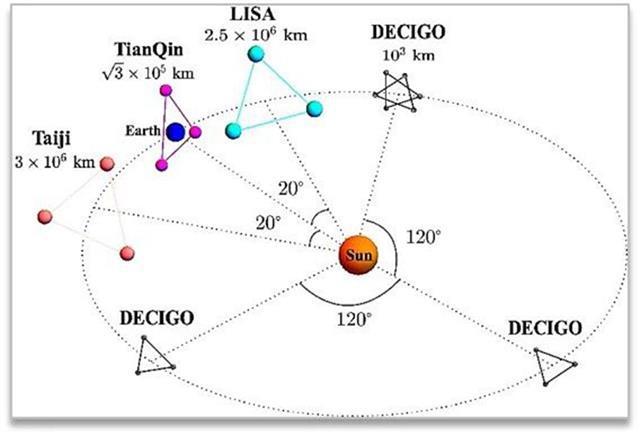
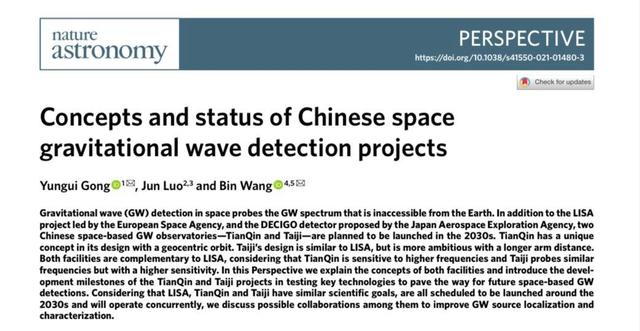
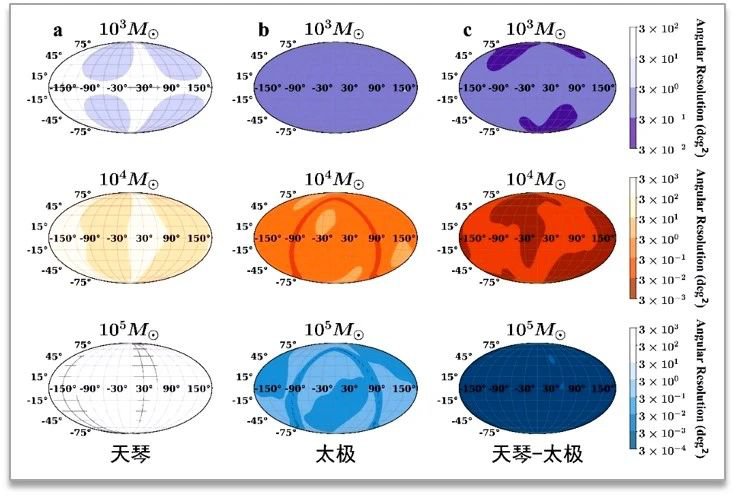
Gravitational wave (GW) detection in space probes the GW spectrum that is inaccessible from the Earth. In addition to the LISA project led by the European Space Agency, and the DECIGO detector proposed by the Japan Aerospace Exploration Agency, two Chinese space-based GW observatories—TianQin and Taiji—are planned to be launched in the 2030s. TianQin has a unique concept in its design with a geocentric orbit. Taiji’s design is similar to LISA, but is more ambitious with a longer arm distance. Both facilities are complementary to LISA, considering that TianQin is sensitive to higher frequencies and Taiji probes similar frequencies but with a higher sensitivity. In this perspective scientists explain the concepts of both facilities and introduce the development milestones of the TianQin and Taiji projects in testing key technologies to pave the way for future space-based GW detections. Considering that LISA, TianQin and Taiji have similar scientific goals, are all scheduled to be launched around the 2030s and will operate concurrently, scientists discuss possible collaborations among them to improve GW source localization and characterization.
The above article was jointly completed by Professor Yungui Gong from Huazhong University of Science and Technology, Professor Jun Luo from Sun Yat-sen University and Professor Bin Wang from the Center for Gravitation and Cosmology at Yangzhou University. Professor Yungui Gong and Professor Bin Wang are co-corresponding authors.
"Concepts and status of Chinese space gravitational wave detection projects" appears in the current issue of Nature Astronomy (DOI: https://doi.org/10.1038/s41550-021-01480-3)
 苏公网安备 32100302010246号