Despite the growing resistance, tetracycline antibiotics remain among the most widely used antibiotics in clinic and agricultural settings. Indeed, tetracyclines ranked in one of the top three antibiotics of the clinical prescriptions in the United States in 2010. Furthermore, other derivatives including doxycycline, minocycline and tigecycline were continuously introduced into clinical practices. These tetracyclines have the broad‐spectrum activity against both Gram‐positive and Gram‐negative bacteria. Compared to other antibiotics, tetracyclines such as doxycycline and minocycline have better tissue permeability, with high oral bioavailability and low price. However, tetracycline resistance has been found to be very common in bacteria (above 80% resistance rate). The emergence of tetracycline‐resistant pathogens has seriously reduced their efficacies. In addition, a recent study firstly reveals the rapid dynamics of resistance acquisition in susceptible Escherichia coli via transferable plasmids encoding the tetracycline‐efflux pump TetA. Therefore, innovative cost‐effective strategies warrant to tackle the crisis of tetracycline resistance. The antibiotic adjuvant strategy is a promising approach to extend the lifespan of existing antibiotics through inhibiting bacterial resistance or enhancing antibiotic killing.
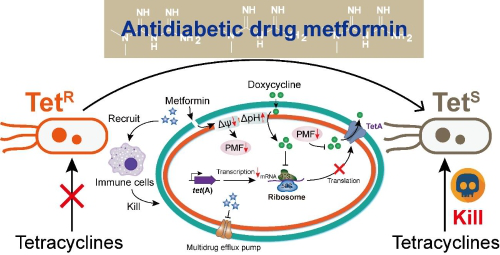
To explore the effective antibiotic combinations, Professor Wang Zhiqiang and his team therefore tested the activity of 158 U.S. Food and Drug Administration (FDA)‐approved compounds with doxycycline against MDR E. coli. They find that metformin, an oral hypoglycemic agent that widely used as a first‐line therapy for type 2 diabetes, remarkably potentiates the activity of doxycycline against a variety of tet(A)‐positive resistant pathogens. Further investigations show that metformin disrupts the electrical potential (Δψ) in E. coli and promotes the intracellular accumulation of doxycycline, thus overcoming intrinsic resistance. In addition, metformin modulates host immune responses to infections, including the recruitment of neutrophils and mitigation of inflammatory responses. Collectively, these data demonstrate the potential of metformin as an adjuvant therapy to treat tetracycline‐resistant bacteria associated infections.
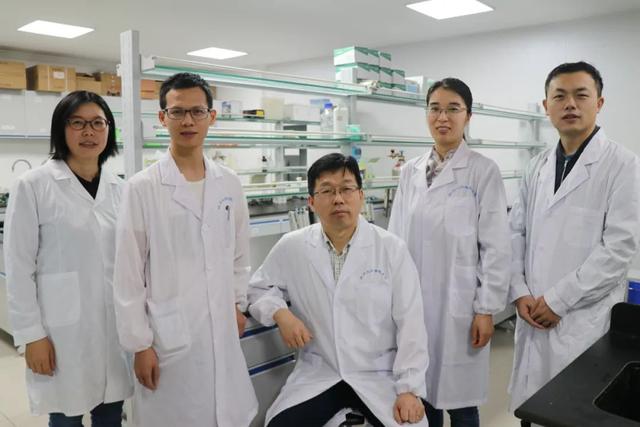
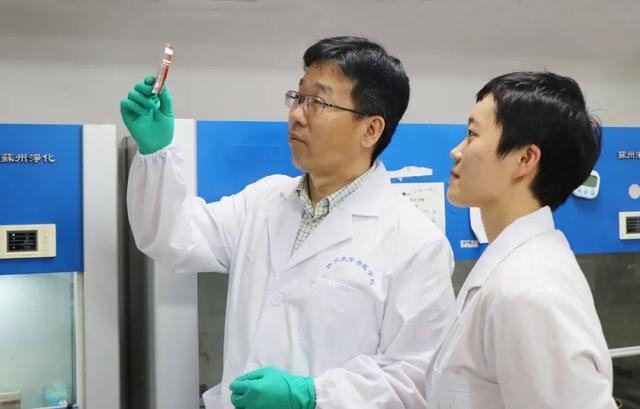
 In May 2020, Dr. Liu Yuan from the College of Veterinary Medicine at Yangzhou University, as the first author, published these findings in Advanced Science. Professor Wang Zhiqiang from Yangzhou University and Professor Zhu Kui from China Agricultural University are co-corresponding authors. This work was supported by the National Key Research and Development Program of China, the National Natural Science Foundation of China, the Natural Science Foundation of Jiangsu Province of China, China Postdoctoral Science Foundation funded project, a project funded by the Priority Academic Program Development of Jiangsu Higher Education Institutions (PAPD), and Lift Engineering of Young Talents of Jiangsu Association for Science and Technology.

Read more: https://onlinelibrary.wiley.com/doi/full/10.1002/advs.201902227
 苏公网安备 32100302010246号