 In February 2020, the researchers from YZU published a review article in Cellular and Molecular Life Sciences where they revisited and described the roles of various subsets of immune cells in host defense against MDV infection and proposed areas of research that need to be further explored.
Marek’s disease virus (MDV) is a highly oncogenic alphaherpesvirus that causes deadly T-cell lymphomas and serves as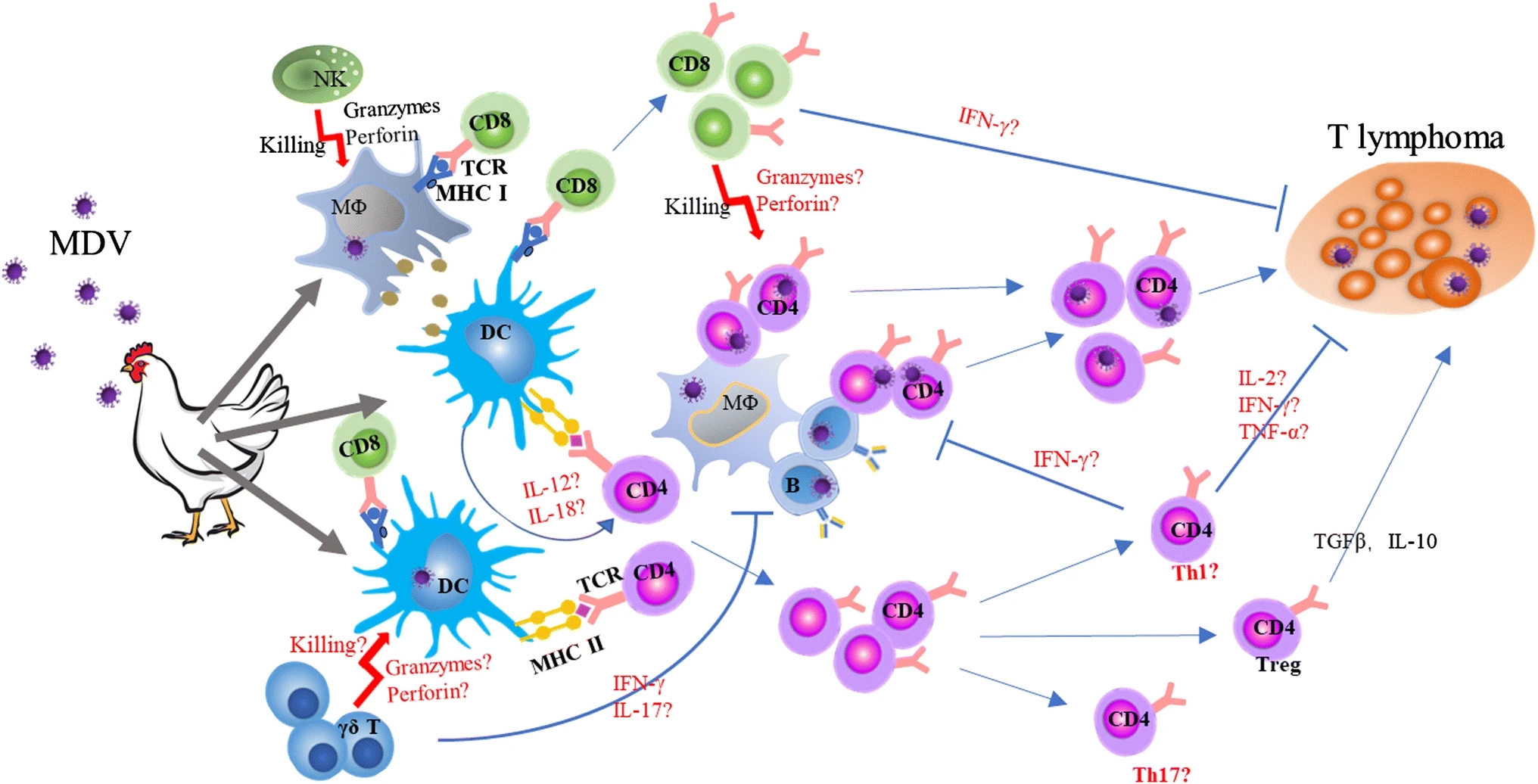 a natural virus-induced tumor model in chickens. Although Marek’s disease (MD) is well controlled by current vaccines, the evolution of MDV field viruses towards increasing virulence is concerning as a better vaccine to combat very virulent plus MDV is still lacking. Our understanding of molecular and cellular immunity to MDV and its immunopathogenesis has significantly improved, but those findings about cellular immunity to MDV are largely out-of-date, hampering the development of more effective vaccines against MD. T-cell-mediated cellular immunity was thought to be of paramount importance against MDV. However, MDV also infects macrophages, B cells and T cells, leading to immunosuppression and T-cell lymphoma. Additionally, there is limited information about how uninfected immune cells respond to MDV infection or vaccination, specifically, the mechanisms by which T cells are activated and recognize MDV antigens and how the function and properties of activated T cells correlate with immune protection against MDV or MD tumor.
The aim of this review article is to revisit the roles of each immune cell subset and their effector mechanisms in the host immune response to MDV infection or vaccination, with an emphasis on areas of research that need further investigation and to provide useful information for rational design and development of novel MDV vaccines.
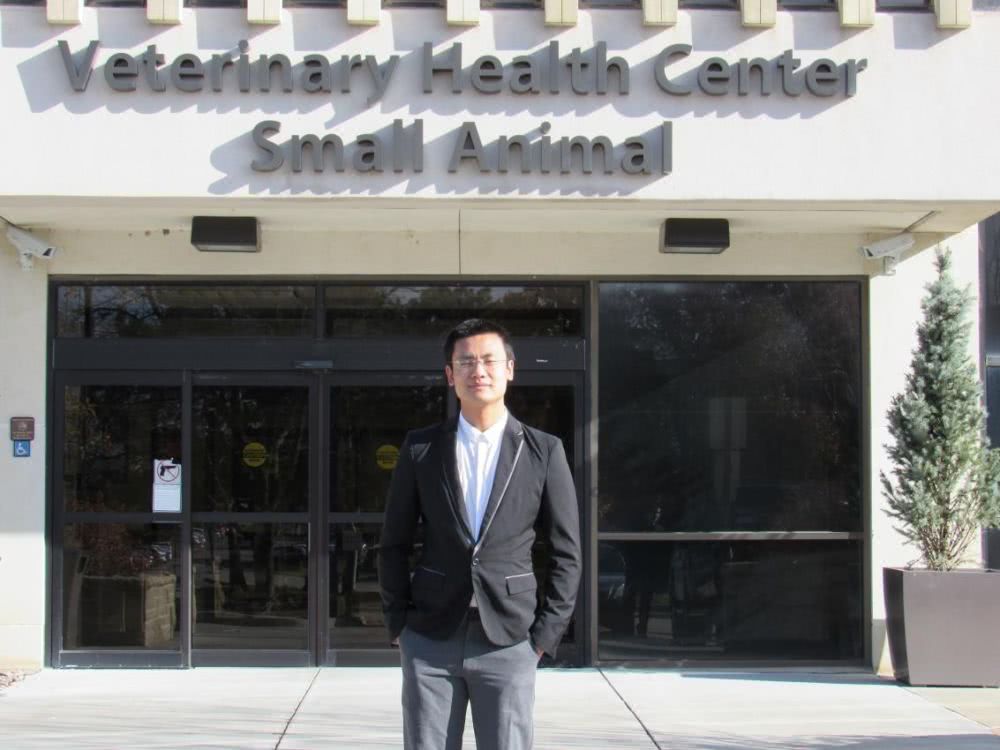
Dr. Yang Yi, as the first author of this article, holding a Ph.D. in Preventive Veterinary Medicine, is a teacher at the College of Veterinary Medicine of Yangzhou University. Dr. Yang’s primary experience has concerned with the mechanisms of pathogenesis induced by bovine leukemia virus and molecular characterization of major vector borne and zoonotic diseases. Professor Shang Shaobin and Professor Qin Aijian are the co-corresponding authors of this article.
 |
|  |
|  |
| Professor Shang Shaobin |
| Professor Qin Aijian |
| Dr. Yang Yi |
Read More: https://link.springer.com/article/10.1007%2Fs00018-020-03477-z
 苏公网安备 32100302010246号